
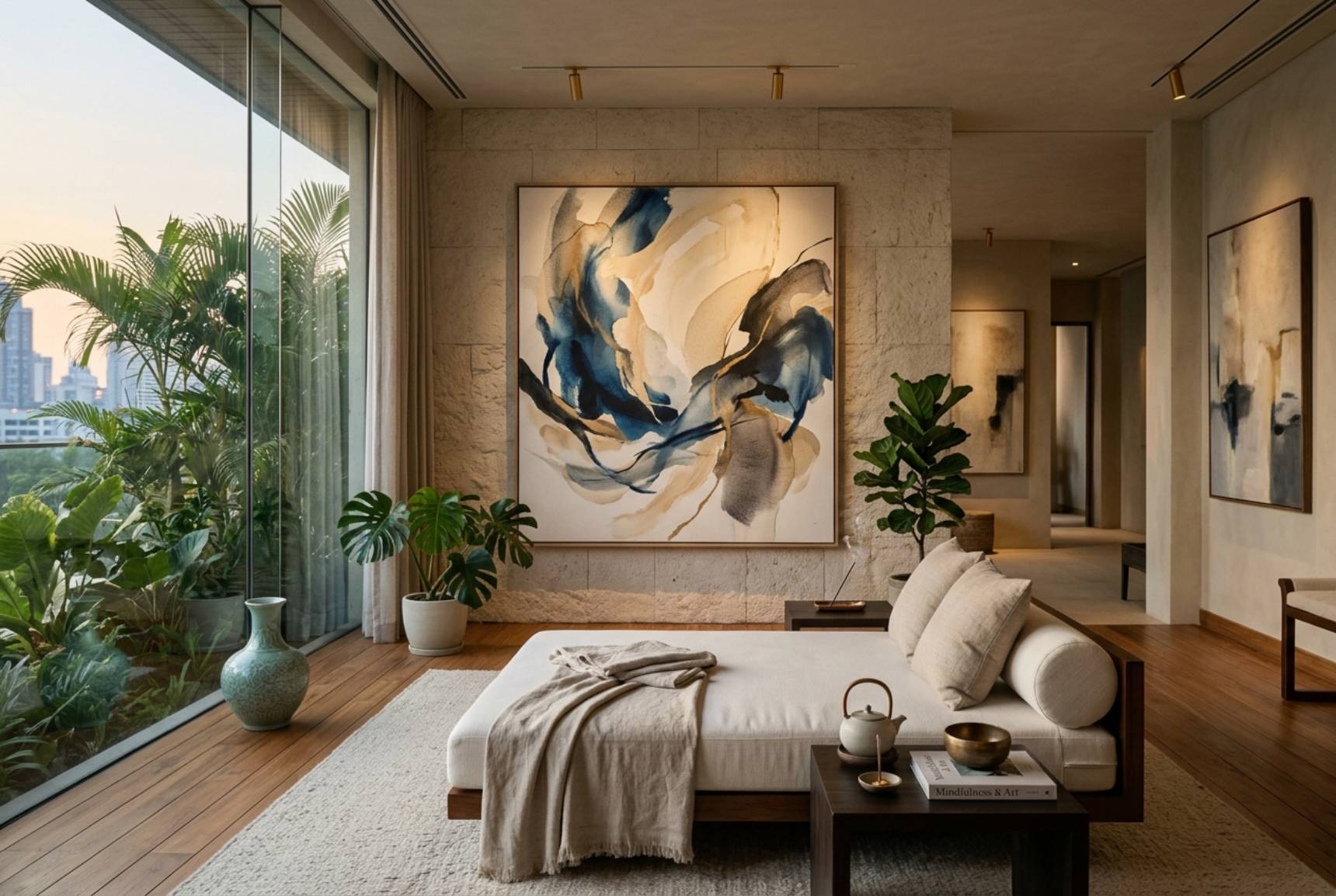
In a city defined by movement, energy, and constant discovery, stillness has become a rare luxury. Bangkok invites us to experience life through its many layers—architecture, design, cuisine, culture, and art—yet sometimes the most meaningful experience is simply to pause.
There is a unique relationship between art and stillness. A beautiful painting can slow our attention. A carefully composed space can quiet the mind. A sculpture, a colour, or a delicate arrangement of light can invite us to observe rather than react. In these moments, visual beauty becomes more than something to admire; it becomes a pathway toward inner calm.
At the intersection of contemporary creativity and refined wellness, the experience of art can extend beyond the gallery. It can become part of an environment designed to help us disconnect from external noise and reconnect with ourselves.
When Looking Becomes a Form of Mindfulness
Our daily lives are increasingly visual. Screens, advertisements, notifications, social media, architecture, and digital content constantly compete for our attention. We move quickly from one image to another, rarely allowing ourselves enough time to truly look.
Art asks us to do something different.
Standing before an artwork, we are encouraged to slow down. We notice colour, texture, proportion, movement, light, and space. We may begin by looking at the whole composition before gradually discovering smaller details. This simple act of sustained attention can create a sense of mental distance from everyday distractions.
In this way, experiencing art can resemble a form of mindfulness.
There is no need to interpret every brushstroke or understand every artistic intention. Sometimes, simply allowing an artwork to hold our attention is enough. The mind becomes less focused on what comes next and more connected to what is happening in the present moment.
The Emotional Power of Visual Beauty
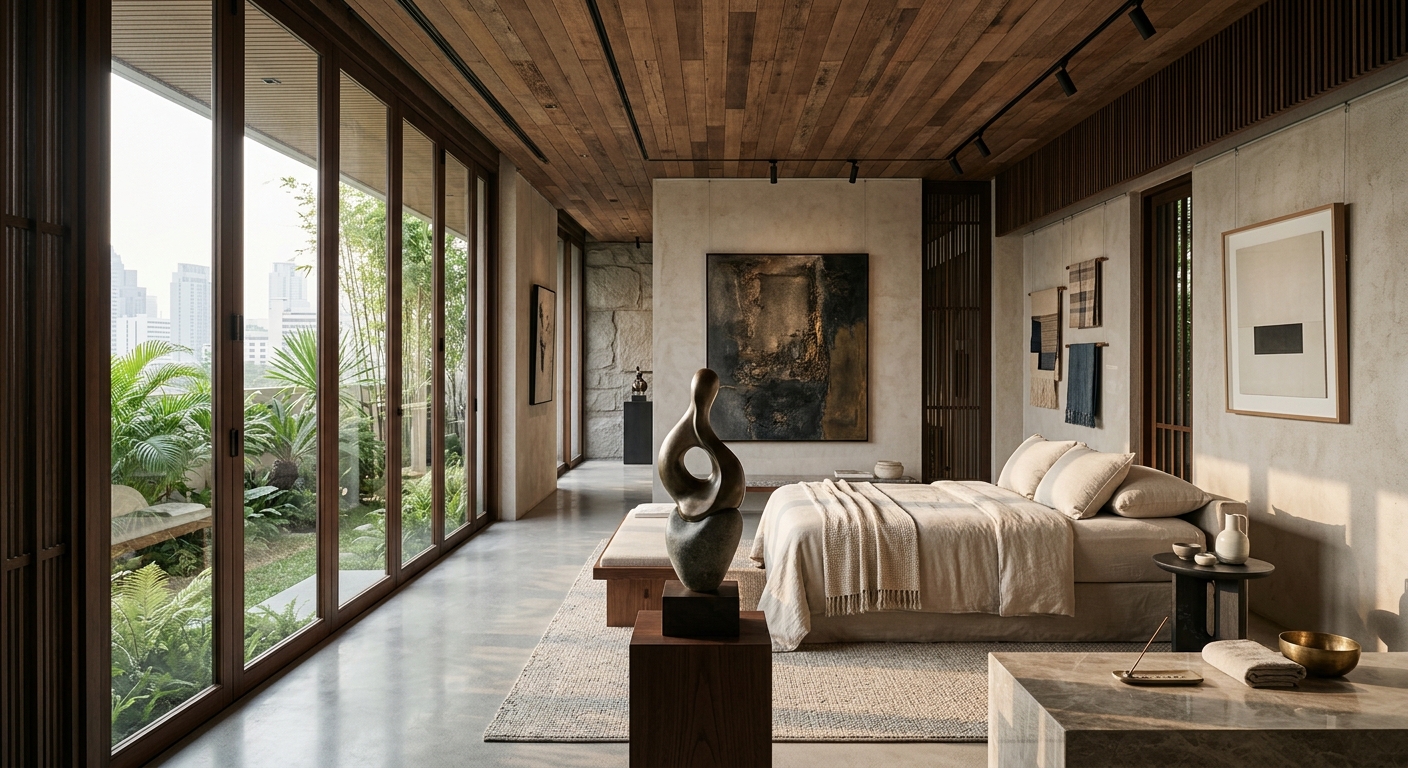
Beauty has an emotional dimension that cannot always be explained logically.
A particular colour may evoke warmth. A landscape may create a sense of openness. Organic forms can feel calming, while balanced compositions can provide a subtle feeling of harmony. The experience is personal, shaped by memory, culture, personality, and individual perception.
This is one reason art can contribute to a peaceful environment.
When thoughtfully incorporated into a wellness setting, visual elements can help shape the atmosphere before a treatment even begins. Soft lighting, natural textures, sculptural forms, carefully selected artworks, and harmonious colours can encourage the transition from an active state of mind toward a slower, more contemplative rhythm.
The environment becomes part of the experience.
From Gallery to Spa: Where Art Meets Wellness
Traditionally, art and wellness have occupied different spaces. Galleries invite us to look, think, and engage with creative expression, while spas encourage physical relaxation and sensory restoration.
Today, these boundaries are becoming increasingly fluid.
A contemporary spa can be experienced almost like an art space: a place where architecture, interiors, scent, sound, touch, and visual beauty work together to create a complete sensory journey.
Imagine entering a serene environment where an artwork catches your attention before your treatment begins. The room is quiet. Natural materials create warmth. Light moves gently across the walls. The visual composition encourages you to pause.
The artwork is no longer simply decoration.
It becomes part of the ritual.
This approach reflects a broader understanding of luxury. True luxury is increasingly associated not only with beautiful surroundings or exceptional service, but with time, attention, privacy, and the ability to feel completely present.
The Art of Creating Space for Yourself
Stillness does not necessarily mean silence or inactivity. It can mean creating enough space to experience the present without constantly demanding something from ourselves.
Art can provide that space.
When we observe an artwork, there is no immediate requirement to respond. We can simply look. The same principle can be found in wellness rituals, where deliberate movements and pauses encourage us to become more aware of our breathing, body, and surroundings.
This creates an interesting parallel between the artist and the wellness practitioner.
An artist carefully considers composition, rhythm, contrast, and balance. A skilled therapist similarly works with rhythm, pressure, movement, and transition. Both experiences depend on sensitivity and attention.
Both invite us to slow down.
Bangkok: A City Where Art and Wellness Can Coexist
Bangkok has developed into a dynamic cultural destination where contemporary art, traditional Thai aesthetics, architecture, design, hospitality, and wellness increasingly overlap.
From intimate galleries and creative spaces to sophisticated hotels and luxury spas, the city offers many ways to experience beauty outside the conventional museum setting.
Thai culture itself has long valued balance, harmony, craftsmanship, and mindful presence. These qualities can be found in traditional artistic practices as well as in Thai wellness rituals. When interpreted through a contemporary lens, they create opportunities for experiences that feel both culturally connected and distinctly modern.
For visitors and residents alike, this creates an appealing possibility: spending time in Bangkok not simply by moving from one attraction to another, but by allowing individual moments of beauty to become experiences in themselves.
Why Stillness Feels Like a Luxury
In a world where speed is often associated with productivity, choosing to slow down can feel almost radical.
We schedule meetings, answer messages, move through traffic, make decisions, and consume information continuously. Even leisure can become another activity to optimize.
Stillness offers the opposite.
It asks for nothing.
There is no destination to reach and no achievement to complete. There is simply the opportunity to observe, breathe, and experience.
This is perhaps why visual beauty can have such a powerful place within modern wellness. A beautiful environment does not necessarily distract us from relaxation. When thoughtfully designed, it can help us enter it.
An artwork on the wall, sunlight filtering through a window, the texture of natural stone, or the gentle movement of water can become small reminders to slow down.
A More Sensory Definition of Luxury
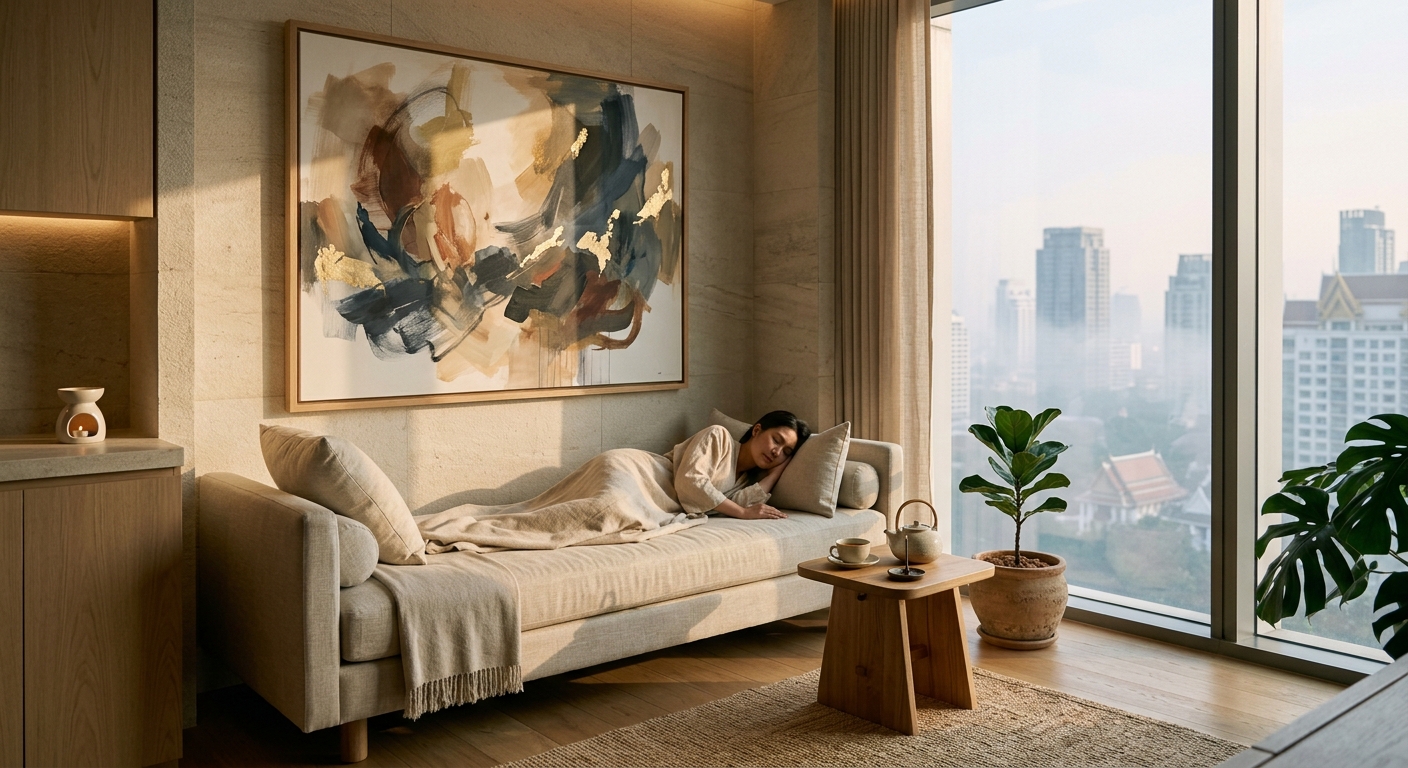
The future of luxury wellness may be less about excess and more about sensory intelligence.
It is about understanding how an environment makes us feel.
The most memorable spa experience may not be defined solely by the treatment itself. It may be the combination of a beautiful interior, a carefully curated artwork, calming sound, subtle fragrance, attentive touch, and the feeling of having uninterrupted time.
When these elements work together, wellness becomes immersive.
Art contributes by giving the eyes something meaningful to experience. Touch brings awareness back to the body. Sound influences the rhythm of the environment. Scent can awaken memory and emotion. Together, they create an experience that engages the whole person.
The Invitation to Pause
Perhaps the greatest value of art is not always found in what it tells us, but in what it allows us to feel.
A painting can invite contemplation. A sculpture can change the way we perceive space. A carefully designed room can encourage us to breathe more slowly. A moment of quiet can remind us that not every second needs to be filled.
This is the art of stillness.
And in Bangkok—a city celebrated for its movement, creativity, and energy—finding a place where art and wellness meet offers a different way of experiencing the city.
Not faster.
Not louder.
But more consciously.
Because sometimes the most beautiful experience is simply having the time to stop, look, breathe, and be present.