
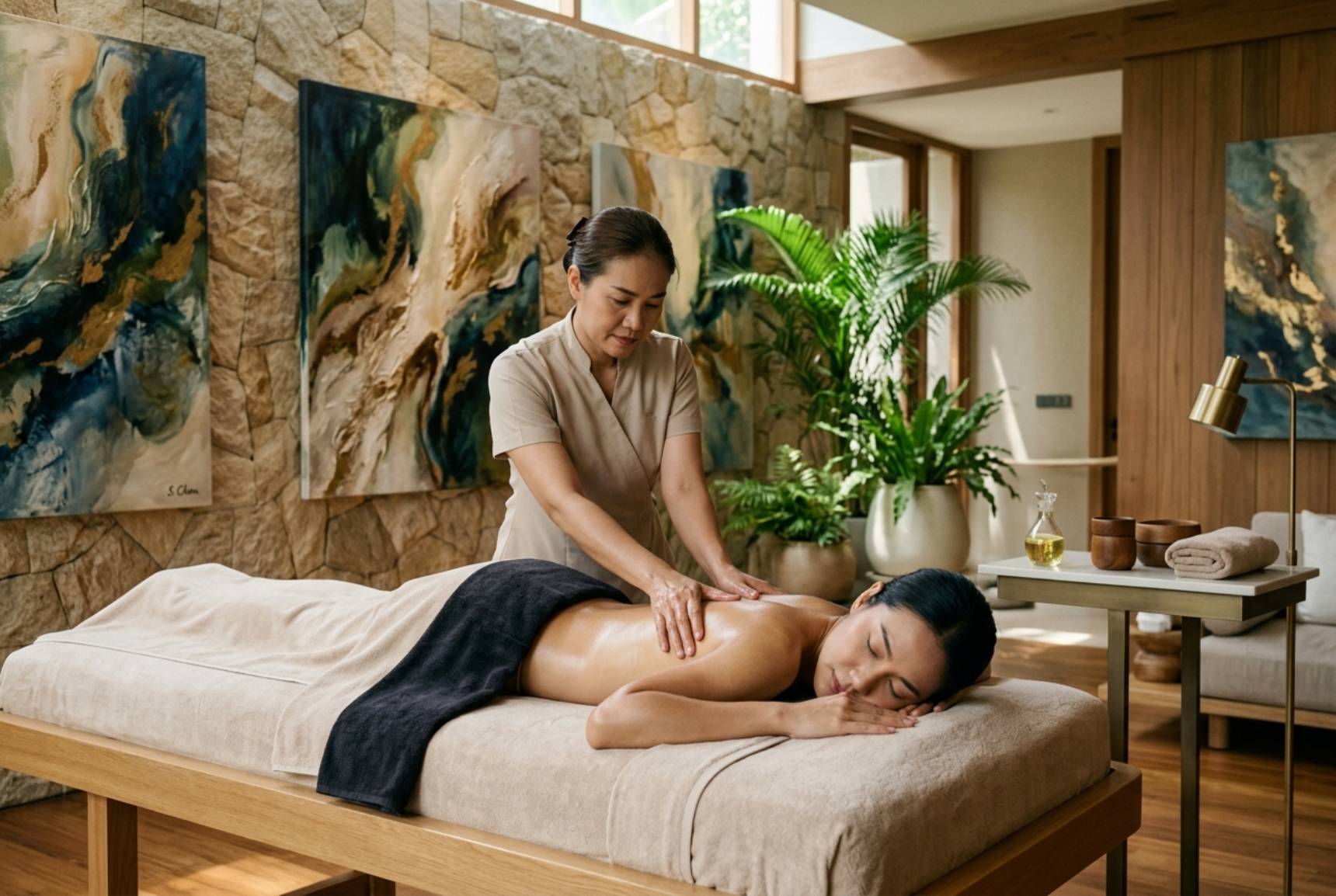
In a world where art is often experienced through sight, spa treatments invite us to experience creativity through another powerful sense: touch. At Art-Bangkok, these two worlds come together in a setting where contemporary art and refined wellness create a dialogue between visual expression and physical sensation.
Abstract art does not always tell us exactly what to see. Instead, it invites us to notice movement, texture, rhythm, balance, contrast, and emotion. In much the same way, a spa treatment is not simply a sequence of techniques. It is an experience shaped by pressure, temperature, rhythm, fragrance, texture, and the natural flow of the body.
The connection between the two is subtle, but deeply intuitive.
The Language of Texture
Texture is one of the defining elements of abstract art. Thick layers of paint, smooth surfaces, rough brushstrokes, translucent materials, and contrasting finishes can transform a simple composition into something that feels almost tangible.
Spa treatments work with texture in a similarly sensory way.
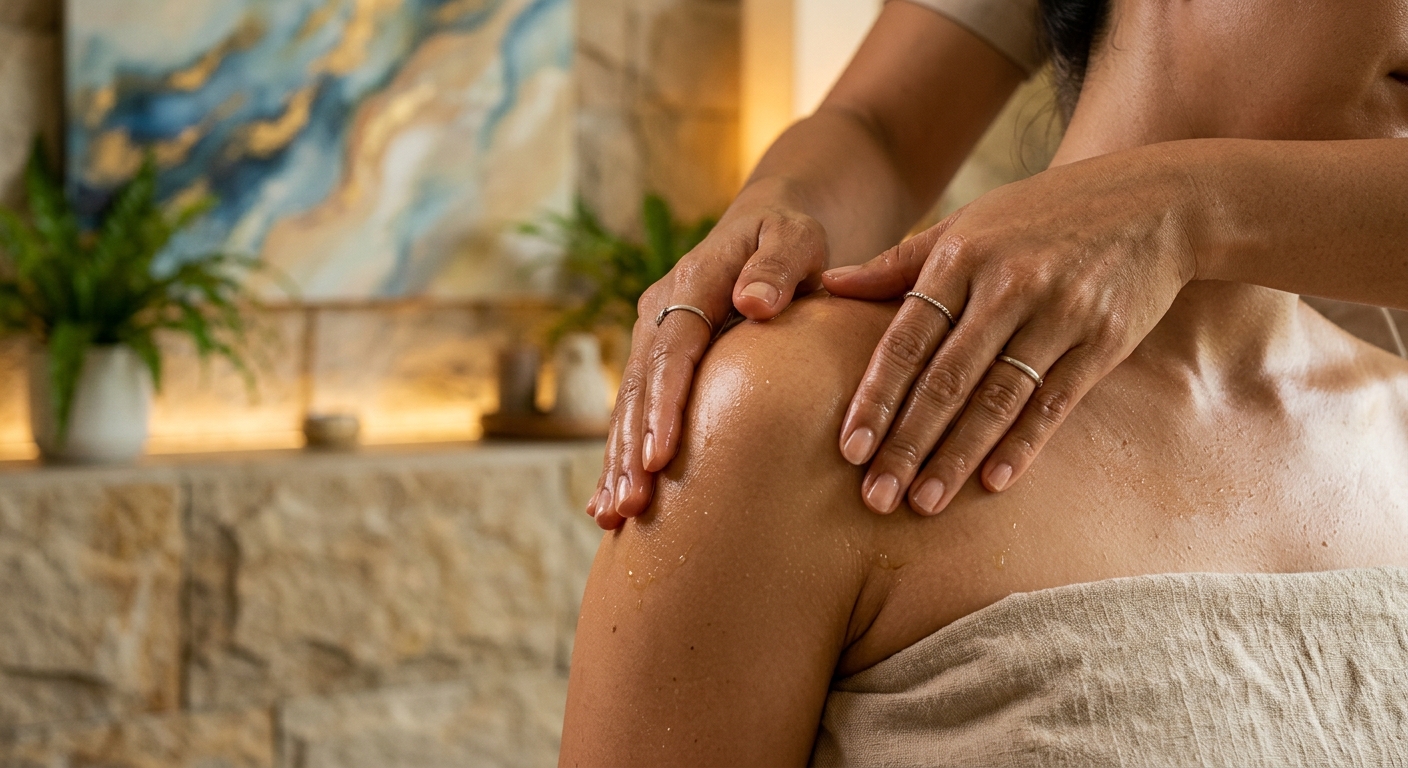
The warmth of a massage oil, the softness of a facial cream, the delicate grain of an exfoliating treatment, or the smooth sensation of warm stones can create a constantly changing tactile landscape. Each texture contributes to the overall experience, just as each artistic material contributes to the character of an abstract composition.
At Art-Bangkok, this relationship between texture and sensation becomes particularly meaningful. Guests can move from observing an artwork to experiencing texture directly through touch, creating a journey that engages both the eye and the body.
Movement as a Form of Expression
Abstract artists often use movement to create energy within a composition. A sweeping line can suggest freedom. Repeated gestures can establish rhythm. Curved forms can create a sense of continuity, while contrasting directions can introduce tension and movement.
Massage follows its own physical vocabulary of movement.
Long, flowing strokes can create a sense of continuity across the body. Rhythmic pressure can establish a steady tempo. Stretching introduces expansion and release, while focused techniques create moments of intensity before returning to softer movements.
Like a painting created through repeated gestures, a treatment develops gradually.
The practitioner responds to the body, adjusting rhythm and pressure to create an experience that feels fluid rather than mechanical. The result is not simply a collection of individual movements, but a carefully composed sequence.
Rhythm, Repetition, and Flow
Repetition is central to both art and wellness.
In abstract compositions, repeated shapes, lines, or gestures can establish visual rhythm. The eye begins to recognize patterns while still discovering subtle variations within them.
A spa treatment can create a similar sensation through repeated movements.
A series of flowing strokes may establish a calming rhythm, while alternating techniques prevent the experience from becoming predictable. The repetition encourages the body to settle into the moment, while variations in pressure and movement keep the experience dynamic.
This balance between repetition and variation is what gives both abstract art and massage their sense of flow.
Colour and the Atmosphere of the Senses
Colour can influence the emotional character of an artwork. Soft neutrals may create a feeling of quietness, while deeper tones can introduce drama and intensity. Bright contrasts can energize a composition, while muted palettes can encourage contemplation.
Spa environments use atmosphere in a comparable way.
Soft lighting, natural materials, carefully selected colours, subtle fragrances, warm towels, and calming sounds can transform a treatment room into an immersive sensory environment.
The experience becomes more than the treatment itself.
Just as an artwork exists within a carefully considered gallery space, a spa treatment benefits from an environment that allows every sensory element to work together.
From Visual Observation to Physical Experience
One of the most fascinating differences between art and spa treatments is the way we interact with them.
A painting traditionally asks us to look. A spa treatment asks us to feel.
Yet both can encourage a similar state of attention.
When standing before an abstract artwork, we may notice details that are easy to overlook at first: the direction of a brushstroke, the relationship between shapes, and the subtle variation of a surface. During a treatment, attention can move inward in the same way. We become aware of pressure, warmth, movement, breathing, and the changing sensations of the body.
The experience shifts from observation to awareness.
This is where the meeting of art and wellness becomes particularly powerful.
The Body as a Living Canvas
Abstract art is often concerned with form without literal representation. Rather than depicting an object exactly as it appears, the artist explores shape, movement, colour, and emotion.
A spa treatment also works with the body as something more dynamic than a fixed form.
The practitioner follows contours, muscles, joints, and natural lines of movement. Pressure is adapted to different areas, creating a constantly changing interaction between hands and body.
In this sense, the body becomes a kind of living canvas—not something to be painted, but something to be experienced through movement and touch.
Every treatment develops its own rhythm.
Every body responds differently.
And like abstract art, the experience can remain open to personal interpretation.
The Beauty of Imperfection
Abstract art often embraces spontaneity. A brushstroke may remain visible. A texture may reveal the artist's hand. A composition may intentionally avoid perfect symmetry.
Spa treatments can also celebrate the natural individuality of the human body.
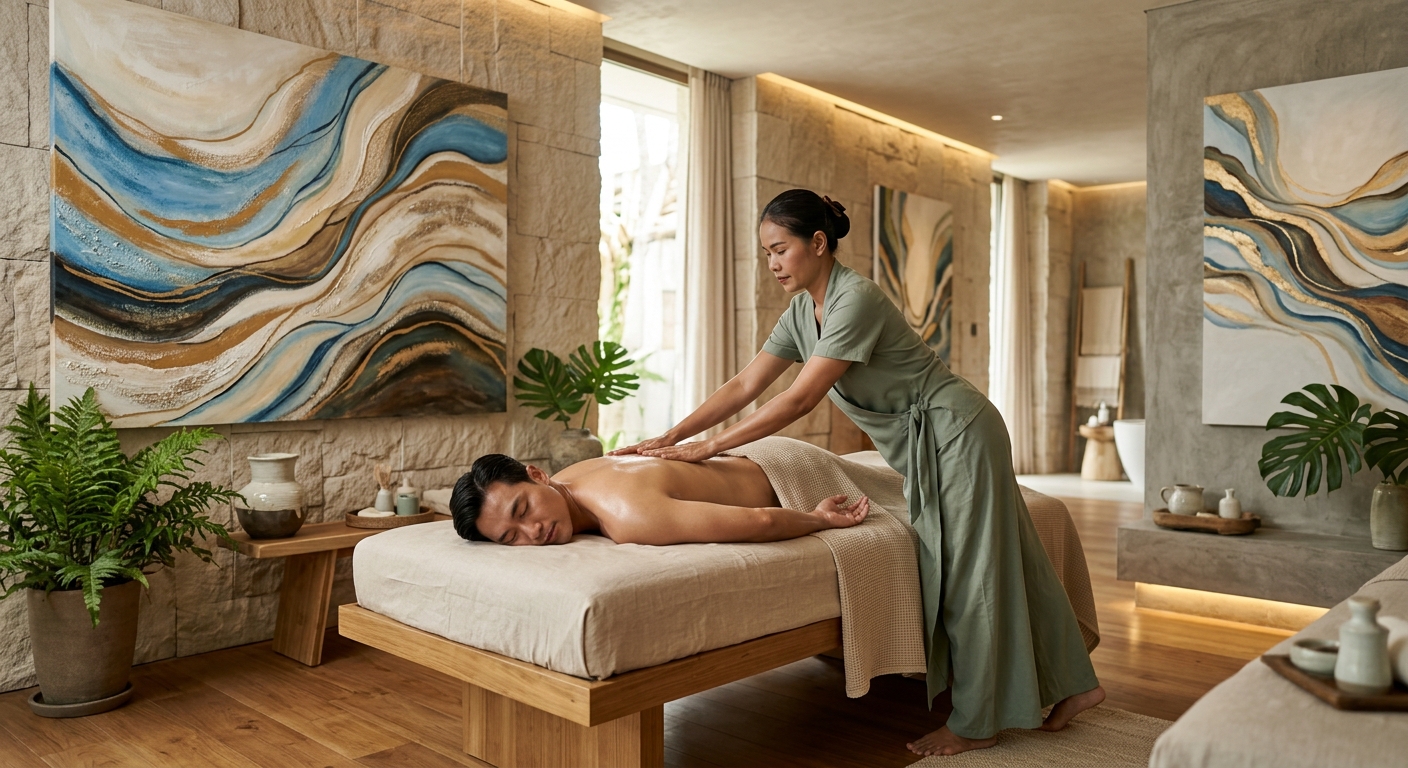
Rather than forcing the body into a predetermined experience, skilled treatments respond to its changing needs and sensations. One movement may lead naturally into another. Pressure can be adjusted. Rhythm can slow down or become more focused.
The beauty lies in the interaction between intention and spontaneity.
A Dialogue Between Art and Wellness
At Art-Bangkok, art is not simply something displayed around a spa experience. It can become part of the atmosphere through which wellness is perceived.
The artwork encourages contemplation.
The treatment encourages sensation.
The environment connects the two.
Together, they create an experience where looking and feeling become complementary forms of relaxation.
A guest may pause in front of an abstract composition and notice its flowing lines, then enter a treatment room where similarly fluid movements are experienced through touch. A textured artwork may inspire awareness of surface, while a facial or body treatment introduces a completely different tactile dimension.
The connection does not need to be literal.
It is sensory.
When Touch Becomes an Artistic Experience
The most memorable spa experiences often stay with us because they engage more than one sense. They create associations between touch, atmosphere, fragrance, sound, temperature, and emotion.
Abstract art works in much the same way. It does not always provide a single interpretation. Instead, it creates space for the viewer to experience something personally.
This is where art and wellness naturally meet.
Both invite us to slow down.
Both encourage awareness.
Both transform simple elements—line, texture, movement, pressure, and warmth—into something more immersive.
At Art-Bangkok, the meeting of art and spa creates an environment where creativity can be observed and relaxation can be felt. Here, the language of abstract art extends beyond the canvas, finding a new expression through the rhythm of touch and the textures of the spa experience.
Experience Art Through Every Sense
Because sometimes, art is not only something we see. It is something we feel.
Discover a unique approach to wellness at Art-Bangkok, where captivating art, refined spa rituals, texture, movement, and tranquillity come together to create an experience that engages both the senses and the imagination.